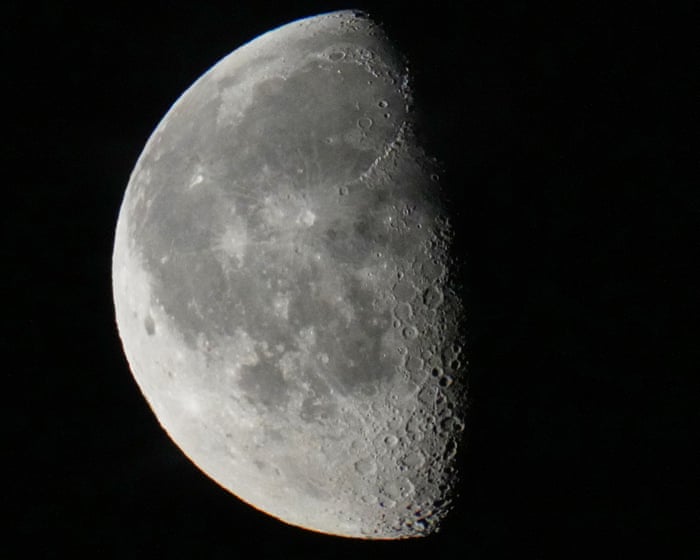
Sodium and lithium gas was detected in a plume thought to span tens of kilometres, created when part of a SpaceX rocket crashed into the lunar surfaceA telescope in Chile has captured evidence of the impact caused by...
See moreSodium and lithium gas was detected in a plume thought to span tens of kilometres, created when part of a SpaceX rocket crashed into the lunar surface
A telescope in Chile has captured evidence of the impact caused by part of a SpaceX rocket slamming into the moon while travelling at 8,690km/h (5,400mph).
The European Southern Observatory’s (ESO) Very Large Telescope observed “spectral lines” – a colourful illustration of the sodium and lithium gas – in the plume of lunar dust stirred up by the impact.
Continue reading...
Sodium and lithium gas was detected in a plume thought to span tens of kilometres, created when part of a SpaceX rocket crashed into the lunar surfaceA telescope in Chile has captured evidence of the impact caused by...
See more